CAN Capability
When we designed the Pro-160 hardware we wanted CAN capability so we included a CAN port, but until now we’ve not had the time to write the software for it. But Erica has been burning the midnight oil recently and has now got it working. It means that all operational data can be streamed out, and operational commands for duty cycle, current limit, and regen current limit can be sent in. It will apply to the Pro-100, 160, and 360 models. It will be included in the soon-to-be released 2.5.7 software. It will also need a small CAN expansion board.


Our First Brushless Controller
Here’s the first prototype of our new brushless controller.

It’s based on our tried and tested Pro-160, so it’s the same size, has the same easy to use software, and a pretty similar feature set. It’s using a larger version of the XMC 1404 processor and a specialist Infineon brushless driver chip.
We’ve added a pedal torque / cadence sensor input so it will be ideal for e-bikes.
Outline specs are 100A and 48V.
ProE-Glide


Sometimes you just gotta do the maths!
A customer of ours is on a mission to get his Sinclair C5 to do 40mph [we won’t ask why!]
The original motor was 250W and would push the C5 to about 15mph, so fitting a 750W motor should be a big improvement, right?

Well it turned out not quite so easy. The new motor briefly pushed the C5 up to 27mph but then expired in a cloud of smoke. Running the numbers on the gearing showed that the motor was only reaching 2600 rpm and not its 3300 peak efficiency speed. This meant it was not spinning fast enough to generate sufficient back emf and that the controller was forcing nearly 1kW into it with predictable results.
So how much power would be needed to reach the magic 40?
The power required is dominated by the aerodynamic drag which scales approximately with the cube of the speed.
We used the formula
P2 = P1(V2/V1)3
Substituting the values
P1 = 250W
V1 = 15mph
V2 = 40mph
It kicked out the answer of 4.7kW which means that he’ll need to either find a much more powerful motor, or do some serious work on improving the aero, and reducing the rolling resistance.
Video compilation
Here’s a compilation of the videos that were sent in for our competition.

Everything in this is using one of our controllers.
2.5.5 Firmware
This post is just to highlight the changes that have been made to the firmware in the Pro-100 / 160 / 360 range of controllers.
We maintain a full list of them on this page….. https://www.4qd.co.uk/docs/pro-160-360-software-versions/
Note: the words software and firmware are used interchangeably throughout.
Video Competition
We’re giving away FOUR awesome prizes in our latest competition — and all you have to do is show us what you’ve built!
Send us a 30-60 second video of your model locomotive, electric vehicle, or any project using a 4QD controller — in action. We’re looking for creativity, good builds, and bonus points if people are having fun!
Prizes up for grabs:
1st Place – Pro-360 Motor Controller
2nd Place – Pro-160 Motor Controller
3rd Place – DNO-10 Motor Controller
4th Place – RBT-24V Hand Control Box
How to enter: Email your video to competition@4qd.co.uk with the word “competition” in the subject line. Include a brief description of what it is, and what 4QD controller is in it.
Deadline: 31st May 2025
Judging: Will be by the 4QD team and be based on creativity, build quality, and fun factor!
Winners will be notified by email and announced on social media.
Let’s see your creations — and good luck!
— The 4QD Team
Terms & Conditions
1. Eligibility
This competition is open to anyone aged 18 or over. Entries are welcome from hobbyists, makers, and model engineers worldwide. Employees of 4QD Ltd and their immediate families are not eligible to enter.
2. Prize Terms
Prizes are non-transferable, and no cash alternative will be offered. 4QD reserves the right to substitute a prize of equal or greater value in the event of unforeseen circumstances.
3. Use of Entries
By submitting a video, you grant 4QD permission to use your video (with credit) on our website, social media channels, and marketing materials. You confirm you have the right to share the content, including permission from anyone visible in the video.
4. General
-
Only one entry per person/project.
-
4QD reserves the right to disqualify any entry that violates these terms or contains inappropriate content.
-
By entering, you agree to these terms and conditions.
5. Facebook Disclaimer
This promotion is in no way sponsored, endorsed, administered by, or associated with Facebook. By entering, you release Facebook from any responsibility related to this competition.
Movimotor Available
We quite often get asked about where to get motors from, so we decided to start stocking a few selected ones. This is the first – a hefty 24V, 750W Italian beauty from Movimotor.
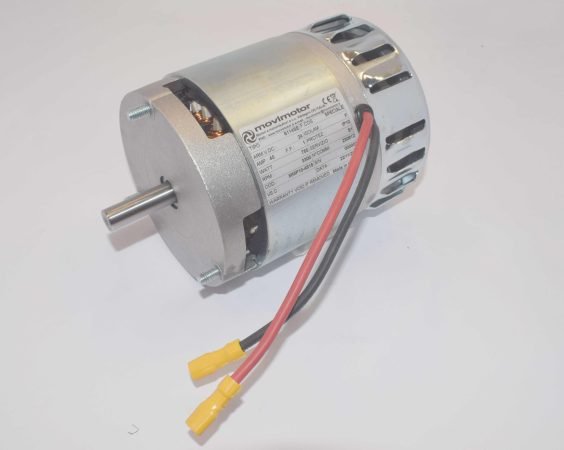
They are available here.
Cherry Picker Revival
Chris from Hutchings Timber got in touch to see if we could help revive this NiftyLift cherry picker that they use for general maintenance. The old control system had expired, and it was not possible to source a replacement. After some discussion about exactly how and what they needed to control we suggested that one of our Pro-360-S models could be made to work. Long story short – it now works a treat and has saved this £20k machine from the scrapyard.

Surveillance Robot
